God, Faith, and the Way We Live
I understand God as the great working of nature and the universe that sustains all life, including the movements of celestial bodies. I also understand God as the life-giving power at work within us, sustaining our heartbeat and the functioning of our organs, things we cannot control by our own will.
When we consciously turn our attention toward this great working and try to bring greater balance and harmony to our way of thinking and living in our daily lives, this great working may respond to us.
What It Means to Bring Balance and Harmony to Our Lives:
- When we complain about what we lack and dwell on our dissatisfaction, we fail to recognize the blessings we already receive.
- If you win an argument, consider that you may have lost some of your blessings in the process.
- When someone asks for your help, put your own concerns aside for a moment and first do something for that person.
These teachings encourage us to do our part, rather than simply ask God for help and leave everything else to God.
What we place our faith in differs from person to person. In my own case, I try to keep in mind, even if I do not always succeed in doing so: “Since I have the opportunity…” and “At least, let me…” These attitudes, too, are part of my faith.
An Experience at the Konkokyo Grand Ceremony
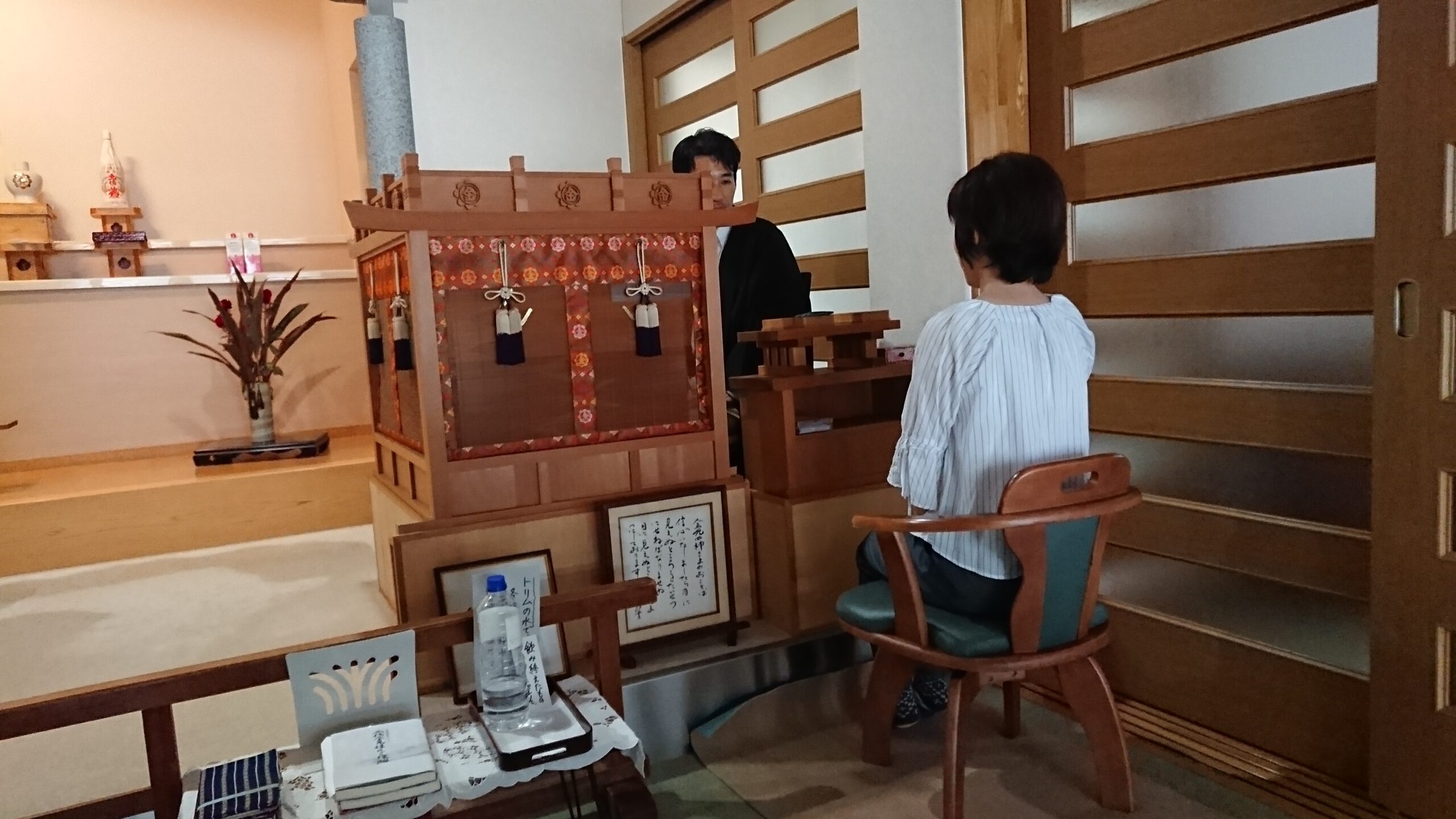
On Sunday, the 10th of this month, I attended a Grand Ceremony at Konkokyo Headquarters.
As usual, there was a return train that would arrive at Shin-Osaka Station at 5:37 p.m. There was also a later option, arriving at 7:25 p.m., which allowed us to stay after the ceremony to help clean the hall and see the head Minister off as he departed.
If the later option had not been available, there would have been nothing to consider. But since it was available, I thought, “Since we have the opportunity, we might as well stay.” So I chose the later train together with my mother.
There were fewer worshippers than usual this time, and the wait to offer my prayer, which normally takes 60 to 75 minutes, was over in just 25 minutes. Since I had the opportunity, I went to the ceremony hall early and took a seat near the front. As a result, I was able to hear the speaker exceptionally well, whereas the words might have been difficult to hear from the back.
After the ceremony, I visited the restored worship hall of the Founder and then his grave. At the grave, I silently expressed my gratitude for the blessing that my grandmother’s life had been sustained, making my own existence possible.
I then walked uphill to visit the graves of my mother’s family, followed by the graves of successive Konkokyo spiritual leaders.
Human beings naturally tend toward laziness. Along the way, I began to feel tired, turned around, and considered heading back. But then I thought, “Since I have come this far, I might as well continue.” So I went on to pay my respects.
Standing before my mother’s family mausoleum, I silently called the names of my grandparents, uncles, and aunts, one by one. I expressed my gratitude for everything up to this point and prayed for guidance in the days ahead.
Some thinkers have pointed out that people today often feel lost and anxious because they lack a spiritual foundation—a sense of connection to something that supports their lives.
I believe there can be a significant difference in our inner lives between regarding our deceased parents and ancestors as simply gone and continuing to turn our hearts toward them as a living source of support and connection.
Then, as I descended from the graves of the successive spiritual leaders toward the main grounds, something unexpected happened.
Suddenly, my body felt remarkably lighter, as though something that had been clinging heavily to both my shoulders and my back had been completely lifted away.
I was astonished that such a thing could happen. At the same time, I found myself thinking, “So it really is possible…”
Six days have passed since then, and I still feel the same.
Another Way to Approach Our Suffering
When someone experiences the kind of physical heaviness I had been feeling, I imagine that the usual course would be to spend considerable time and effort seeking treatment, or to continue living with that heavy feeling.
Medical treatment is certainly valuable. However, I wanted to share this experience because there may also be another way to approach physical discomfort: turning our attention toward the life-giving power that is already working within us, and allowing ourselves to become more aware of it.
I realize that this idea may be difficult to accept. Nevertheless, I believe there may be value in turning our attention toward the power that is continually working to sustain our lives.
Before medicine can help us, there is the food that nourishes us. Before any medical treatment takes place, our organs are already working to keep us alive.
Perhaps something may begin to change if, instead of simply drinking a glass of water with one hand, you hold the glass with both hands and receive the water with a heartfelt sense of gratitude, thinking, “this water sustains my life.”
Faith does not have to mean abandoning practical action or relying on prayer alone. It can begin with something as simple as recognizing the life that is already being sustained within us, and approaching our everyday lives with a little more gratitude and trust.
(16 October 2026)